Fred Halliday, who died last year, was a professor of international relations at the London School of Economics and Political Science for more than 20 years and one of the world's most influential scholars in the field of Middle Eastern studies. He spoke ten languages, including Arabic, and had over 20 books to his name, including
Two Hours That Shook The World, which was about 9/11. In 2009, he wrote an
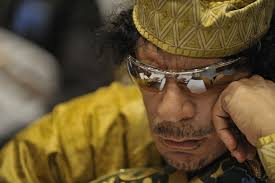
article about Libya on the occasion of the 40th anniversary of the coup d'etat that installed Muammar Gaddafi in power. Reflecting on the "sobering lessons in the politics of illusion" to be learned from the history of the Great Socialist People’s Libyan Arab Jamahiriya, this is how Halliday ended the piece:
Libya is far from the most brutal regime in the world, or even the region: it has less blood on its hands than (for example) Sudan, Iraq, and Syria. But al-Jamahiriyah remains a grotesque entity. In its way it resembles a protection-racket run by a family group and its associates who wrested control of a state and its people by force and then ruled for forty years with no attempt to secure popular legitimation. The outside world may be compelled by considerations of security, energy and investment to deal with this state. But there is no reason to indulge the fantasies that are constantly promoted about its political and social character, within the country and abroad. Al-Jamahiriyah is not a "state of the masses": it is a state of robbers, in formal terms a kleptocracy. The Libyan people have for far too long been denied the right to choose their own leaders and political system - and to benefit from their country's wealth via oil-and-gas deals of the kind the west is now so keen to promote. The sooner the form of rule they endure is consigned to the past, the better.


No comments:
Post a Comment